
Bookmark this page so you can come back to it. Questions as you plan? Send them to Bobby, and he will reply personally within 24 hours.
Welcome
This guide answers the questions people ask us most before a first trip to Yunnan: when to go, where to go, visas, money, phones, food and what to pack. Read it in one sitting, then keep it for the weeks before you fly.
Our family has lived in Yunnan for a decade plus, and we have hosted travelers here since 2013. Yunnan is home to 25 of China's 55 recognized ethnic minorities, snow peaks and rainforest in one province, old towns and rice terraces that families still farm. We plan every trip so the villages, inns and artisans you meet earn a fair living from your visit, and so you come home knowing the people, not just the sights.
If a question isn't answered here, send it to Bobby. He replies personally within 24 hours.
When to go
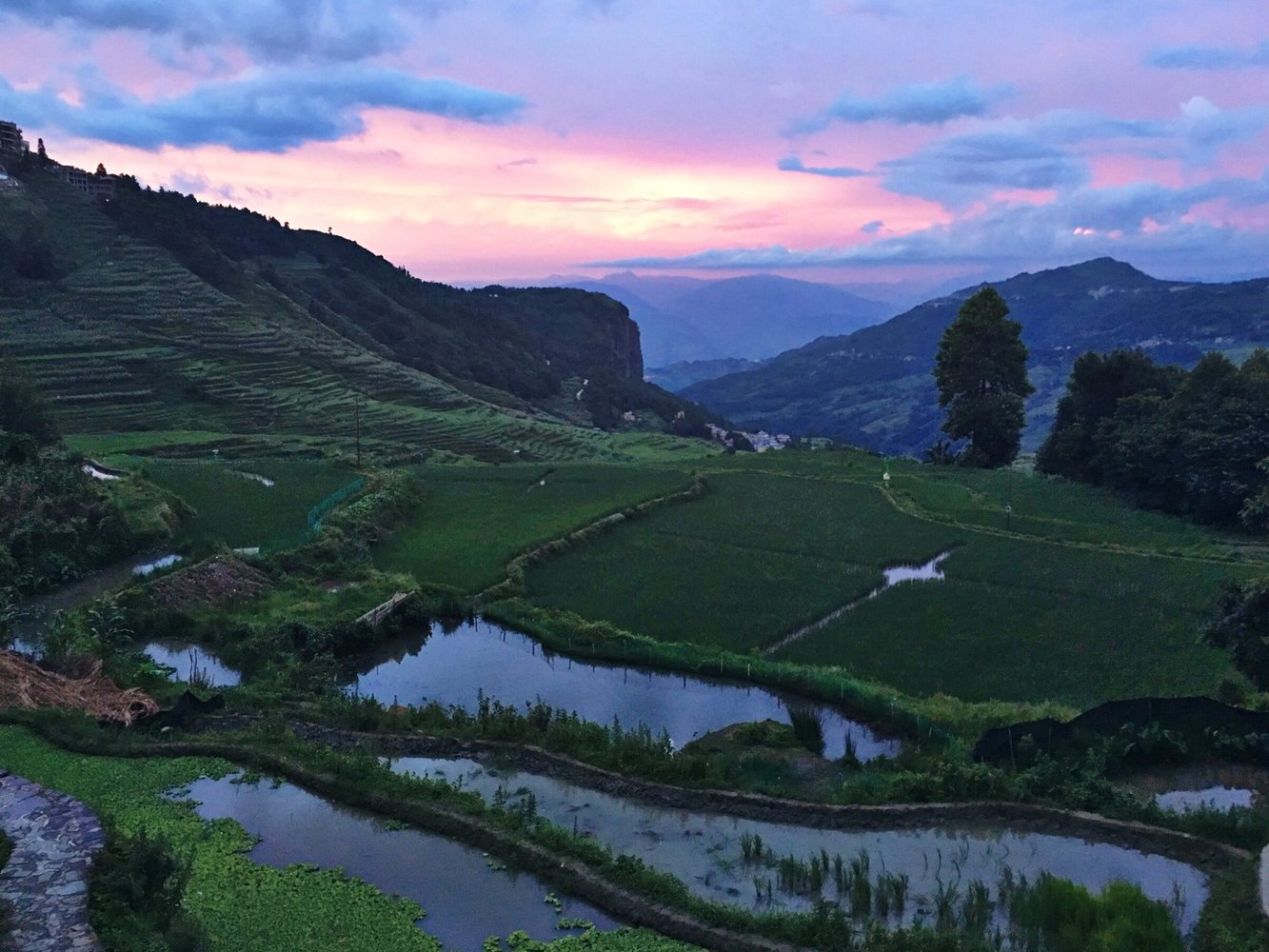
Spring (March to May) and fall (September to November) are the best months in Yunnan: clear skies, mild days and green or golden fields.
| Season | Months | What to expect |
|---|---|---|
| Spring | March to May | Mild and dry, flowers in bloom, our busiest season |
| Summer | June to August | Rainy season, wettest in July and August, green hills and afternoon showers, peak domestic travel |
| Fall | September to November | Clear, mild days, harvest in the fields, our other best season |
| Winter | December to February | Dry and sunny; cold at high places like Shangri-La; Kunming stays mild |
Kunming is called the Spring City because it stays mild all year. Lijiang and Shangri-La sit much higher and feel cooler, especially at night.
Weeks to avoid. China's busiest travel times are Lunar New Year (late January or February) and the week-long national holidays that start on May 1 and October 1. Trains, hotels and famous sights fill with domestic travelers and prices rise. Our guaranteed departures skip these weeks and the June to August peak. If those are the only dates you have, we can still plan around the crowds, at peak-season prices.
How far ahead to book. Six to nine months ahead is ideal for spring and fall. Shorter notice often works too; ask, and we'll tell you honestly what's still open.
Where to go in Yunnan
Most first trips pair Kunming with Lijiang and Dali, or with the rice terraces of the south. These are the places we know best.
| Place | Why go | Good to know |
|---|---|---|
| Kunming | The Spring City: flower markets, the Stone Forest, the Western Hills above Dianchi Lake | Mild all year; most trips start or end here |
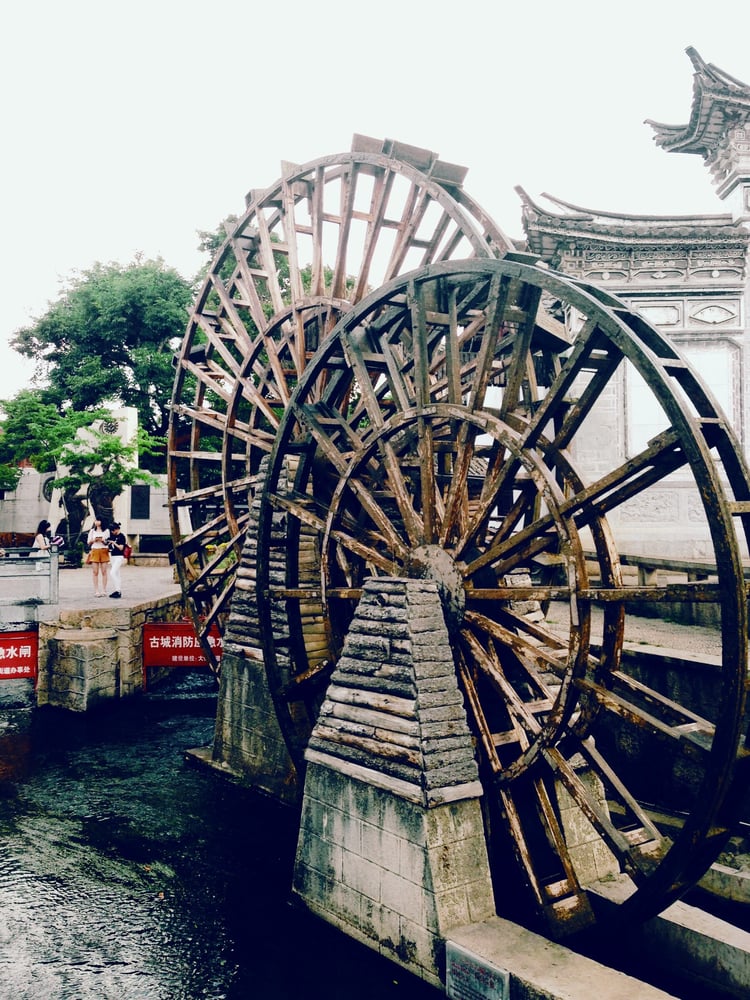
| Lijiang | A UNESCO World Heritage old town of canals and cobbled lanes, home of Naxi culture, beneath Jade Dragon Snow Mountain | About 2,400 m (7,900 ft) |
| Dali | Bai villages, the Three Pagodas, cycling around Erhai Lake | An easy pace after Lijiang |
| Shangri-La | Tibetan plateau culture, wide valleys and alpine grasslands | About 3,300 m (10,800 ft); take it slowly |
| Yuanyang | The Hani rice terraces, a UNESCO World Heritage site, best at sunrise and sunset | Pair with Jianshui |
| Jianshui | Old bridges, temples and courtyard houses, a living museum of southern Yunnan | Ride the heritage train |
| Mi'le | Vineyards, hot springs and green hills near Kunming | A gentle first stop |
| Lugu Lake | A clear alpine lake and the home of the Mosuo people | Remote; best on a longer private trip |
| Pu'er | Tea plantations and misty hillsides, the home of Pu'er tea | For tea lovers |
| Xishuangbanna | Rainforest, Dai culture and the April water-splashing festival | Wild elephants are seen only from a distance |
| Tengchong | Volcanic landscapes, hot springs and tea near the western border | Pair with Dali |
Longer private trips can add Chuxiong (Yi culture), Dongchuan (the Red Land), Puzhehei (karst lakes and lotus fields), Wenshan or Zhaotong.
Beyond Yunnan. Beijing, Xi'an and Chengdu are the classic lead-ins: the Forbidden City and Great Wall, the Terracotta Warriors and the giant pandas. Guilin adds karst peaks and the Li River.
Two ways to travel
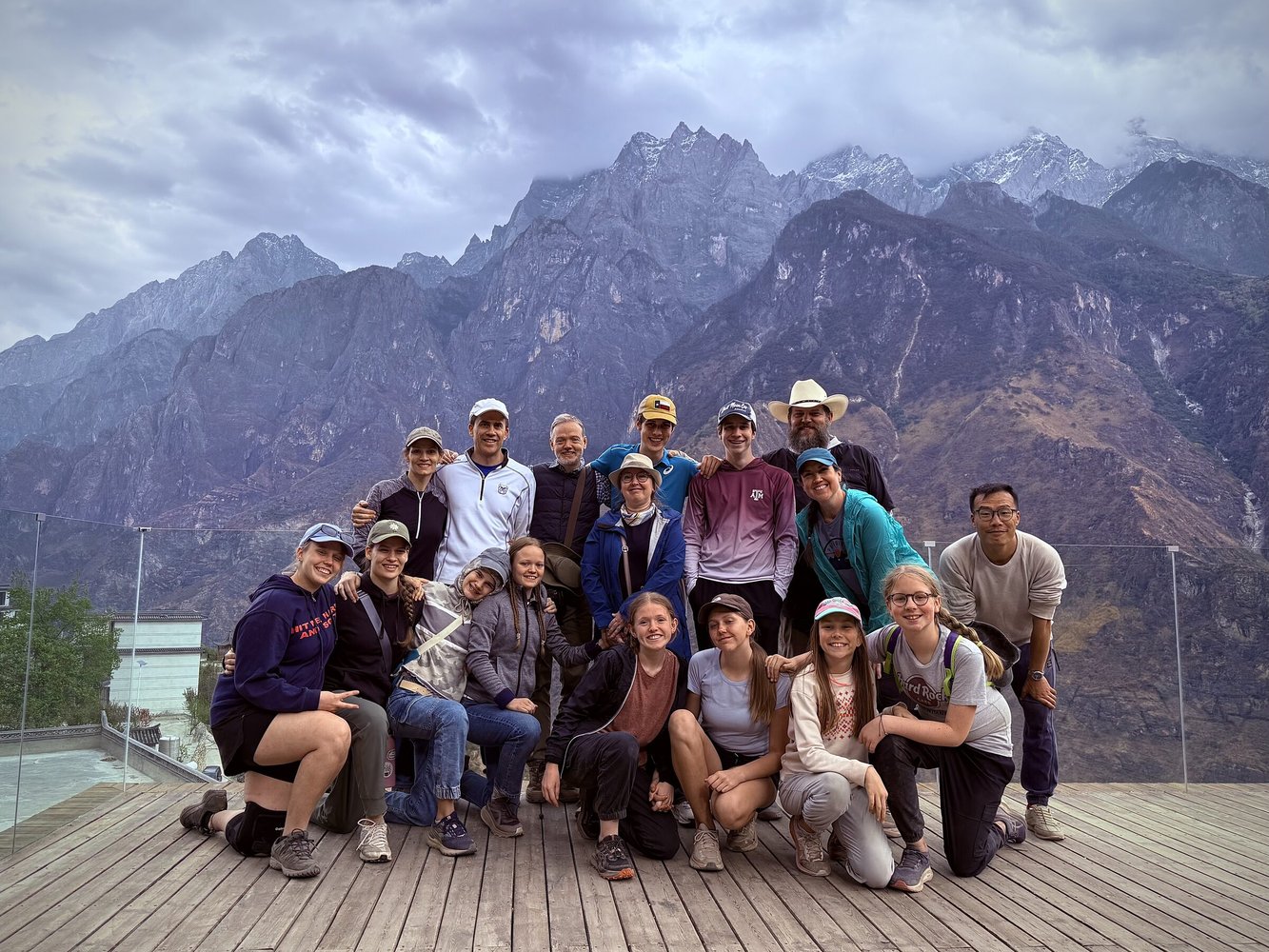
You can join a guaranteed departure on a set date, or have a private trip built around your own dates and pace. Either way your group travels privately, with its own guide and vehicle.
| Forbidden City to Jade Dragon | Great Wall to Ancient Terraces | |
|---|---|---|
| Length | 11 days | 11 days |
| Route | Beijing, Xi'an, Chengdu, Lijiang, Dali, Kunming | Beijing, Kunming, Mi'le, Yuanyang, Jianshui, Kunming |
| Pace | Fuller days, bullet trains between cities | An easier pace |
| Highlights | Forbidden City, Terracotta Warriors, giant pandas, Jade Dragon Snow Mountain, a Bai courtyard in Xizhou | Great Wall, Stone Forest, Mi'le hot springs, Hani rice terraces, Jianshui old town |
| Price per person, twin share | $4,629 | $4,439 |
| Single supplement | $781 | $951 |
Guaranteed departures run on set dates from September to May and go ahead with as few as 2 travelers. The price per person is the same whether 2 or 20 people book, and we never cancel a date for low numbers. Groups of 10 or more who book at least 6 months ahead get the 11th place free. See the dates.
Private trips run on any date for 2 to 30 travelers and follow your interests: tea, crafts, food, photography, hiking, family history. The more people sharing a guide and vehicle, the lower the price per person. Families, travelers with limited mobility and anyone who wants a slower pace usually do best on a private trip.
Every day is a planned program, with your guide beside you. There's rest built in, but you won't be left to figure out a city on your own.
Visas and entry
Most U.S. and Canadian travelers on our guaranteed departures need no visa, thanks to China's 240-hour visa-free transit.
How the 240-hour rule works. Citizens of 57 countries, including the U.S. and Canada, can stay up to 10 days without a visa when they are passing through China to a third country or region. You fly in to Beijing from home and out of Kunming to somewhere else, such as Bangkok, Singapore or Hong Kong. Flying from China straight back to where you started does not count. The 240 hours start at midnight after you land, and you must leave before they run out. Tell your airline at check-in that you're using the visa-free transit, and have your onward ticket ready to show.
When you need a visa. If you'd rather fly straight home, stay longer than 10 days or go somewhere outside the visa-free areas, you need a tourist visa. For U.S. citizens it is typically a 10-year, multiple-entry visa with stays of up to 60 days. Tibet also needs a special permit, which we can arrange. We help with every visa and permit.
Canadian travelers. Canadian ordinary passport holders were given 30-day visa-free entry for tourism through December 31, 2026. Ask us whether it has been extended for your dates; if so, you won't need the third-country flight.
Passports. Your passport must be valid at least six months beyond the day you leave China, with blank pages. Check now, since renewals can take a while.
Rules change, so we confirm what applies to you, and check your flight times against it, before you book.
Money and paying in China
Most people in China pay by phone, and visitors can now do the same with Alipay linked to a Visa or Mastercard.
- Set up Alipay before you leave. Link your card in the app at home; we'll walk you through it. With a foreign card, payments of ¥200 or less are usually free, and Alipay adds a 3% fee to larger ones.
- Carry a little cash. Some yuan for markets, small shops and village stalls is handy.
- Get cash from an ATM in China. You'll get a better rate than changing money at home or at an exchange counter. Your guide can show you where.
- No tipping needed. Gratuities for guides and drivers are already in your price. A little extra for someone who goes above and beyond is welcome but never expected.
- What you'll spend on your own. Drinks with dinner, snacks, souvenirs and any optional extras. Everything else listed as included is covered.
Phones, apps and internet
Your phone will work in China with an international plan from your carrier or a travel eSIM, and Wi-Fi is common in hotels, cafes and many vehicles.
- Western apps. Google, Gmail, WhatsApp, Facebook and Instagram don't work on local Chinese Wi-Fi or Chinese SIM cards. Many travelers find they still work over an international roaming plan or a travel eSIM, so check with your provider before you go.
- Apps to download at home. Alipay, a translation app that works offline, and a map app that works in China. We send the list with simple setup steps a few weeks before you travel.
- Power. China uses 220 volts. Most sockets take U.S.-style two flat prongs, the slanted three-prong Australian style and often two round pins. Phone and laptop chargers usually handle 220 volts; hair dryers may not. A small universal adapter covers it.
Health, altitude and safety
Yunnan is a safe, welcoming place to travel, and the main thing to plan for is altitude.
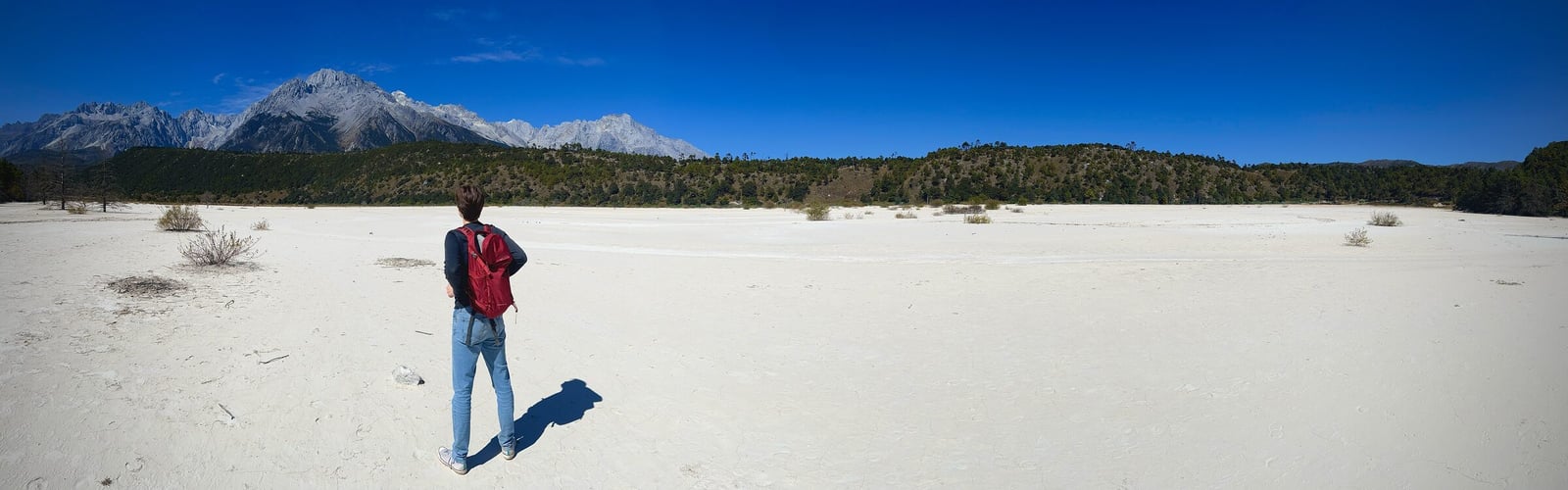
Altitude. Lijiang sits at about 2,400 m (7,900 ft) and Shangri-La at about 3,300 m (10,800 ft). Most travelers feel only mild effects, like shortness of breath on stairs or a light headache on the first day. We climb gradually and keep first days easy. On Jade Dragon Snow Mountain the cable car rises to about 4,500 m (14,800 ft), so we take it slowly, and higher excursions are always optional. If you have heart or lung conditions, talk to your doctor before you book; we can plan a trip that stays lower.
Safety. Violent crime against visitors is rare. Watch your phone and bag in crowded places and keep your passport secure. Your guide is with you every day, and our bilingual team is reachable around the clock.
If you get sick. Your guide takes you to the right clinic or hospital and stays to translate. Hospitals usually ask for payment up front, which is why travel insurance with medical cover matters.
Vaccinations and water. No vaccinations are required for U.S. or Canadian travelers. See a travel clinic about six weeks before you go for routine and recommended shots. Don't drink tap water; bottled water is always in the vehicle and in your room.
Walking. Plan on 3 to 5 miles on a typical day at an easy pace, with stairs at temples and cobblestones in the old towns.
Food
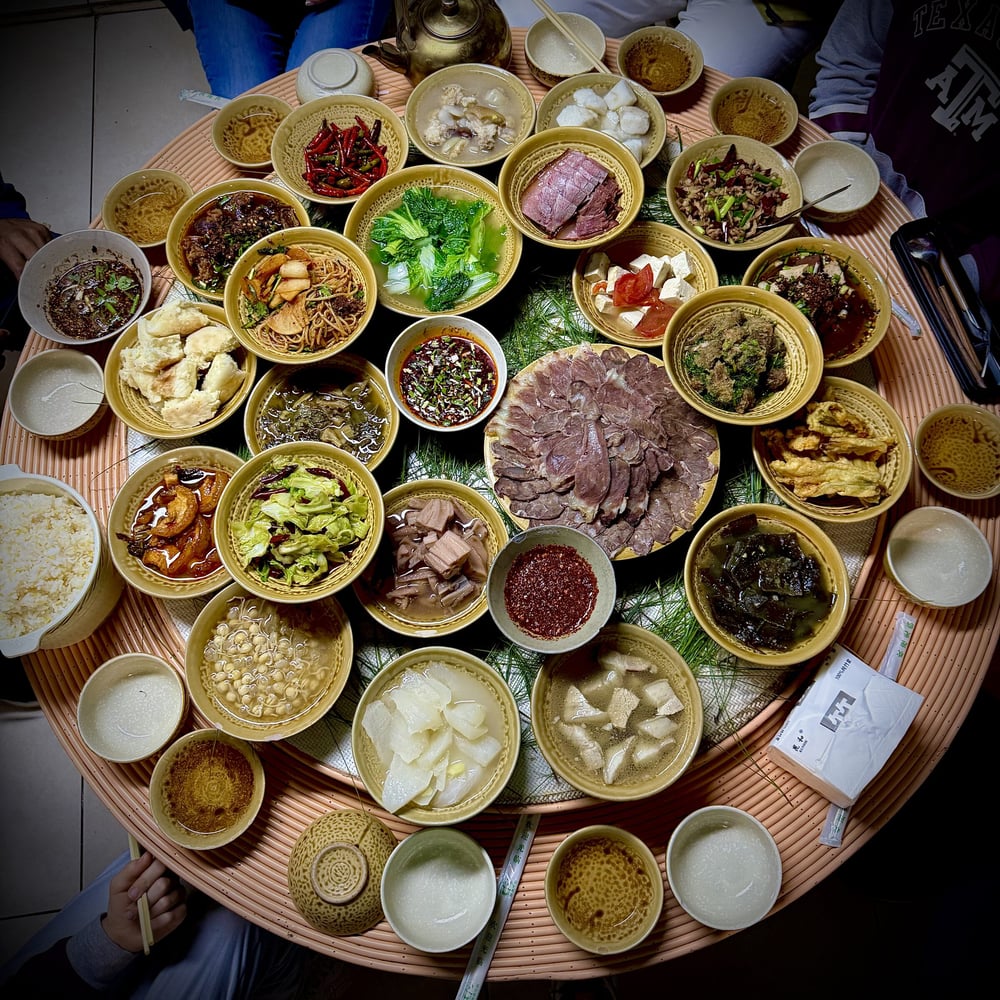
Yunnan cooking is as much about wild mushrooms, fresh herbs, rice noodles and local ham as it is about chili, and most meals are shared family style so you can try a little of everything.
- Spice. We order for the table and ask for dishes mild or on the side.
- Dishes to try. Crossing-the-bridge rice noodles in Kunming, Bai three-course tea in Dali, Naxi baba flatbread in Lijiang, and wild mushrooms in season from June to September.
- Dietary needs and allergies. Tell us when you book. For serious allergies we give you a card in Chinese to show at every meal, and your guide checks with the kitchen.
- Vegetarian and vegan. Vegetarian is easy, and Buddhist vegetarian restaurants are a treat. Vegan takes more care, since eggs and lard turn up in surprising places, so let us know early.
- Western food. Most hotel breakfasts include eggs, toast and coffee. If you need a familiar meal on a long trip, tell your guide.
Packing and what to wear
Pack light and in layers: one medium suitcase and a day bag per person works best.
- Comfortable walking shoes, already broken in
- Layers and a warm top: mornings and evenings are cool in the mountains, even in summer
- A light rain jacket
- Sun hat, sunglasses and sunscreen (the sun is strong at altitude)
- Clothes that cover shoulders and knees for temples
- A refillable water bottle
- Tissues and hand sanitizer (many public toilets don't supply paper)
- A small universal power adapter
- Any medicines you take, in their original packaging
- Copies of your passport and insurance details
Domestic flights in China usually allow one checked bag of up to 20 kg (44 lb), less than most international flights, so we send a packing list with weights for your dates.
Meeting people and traveling well
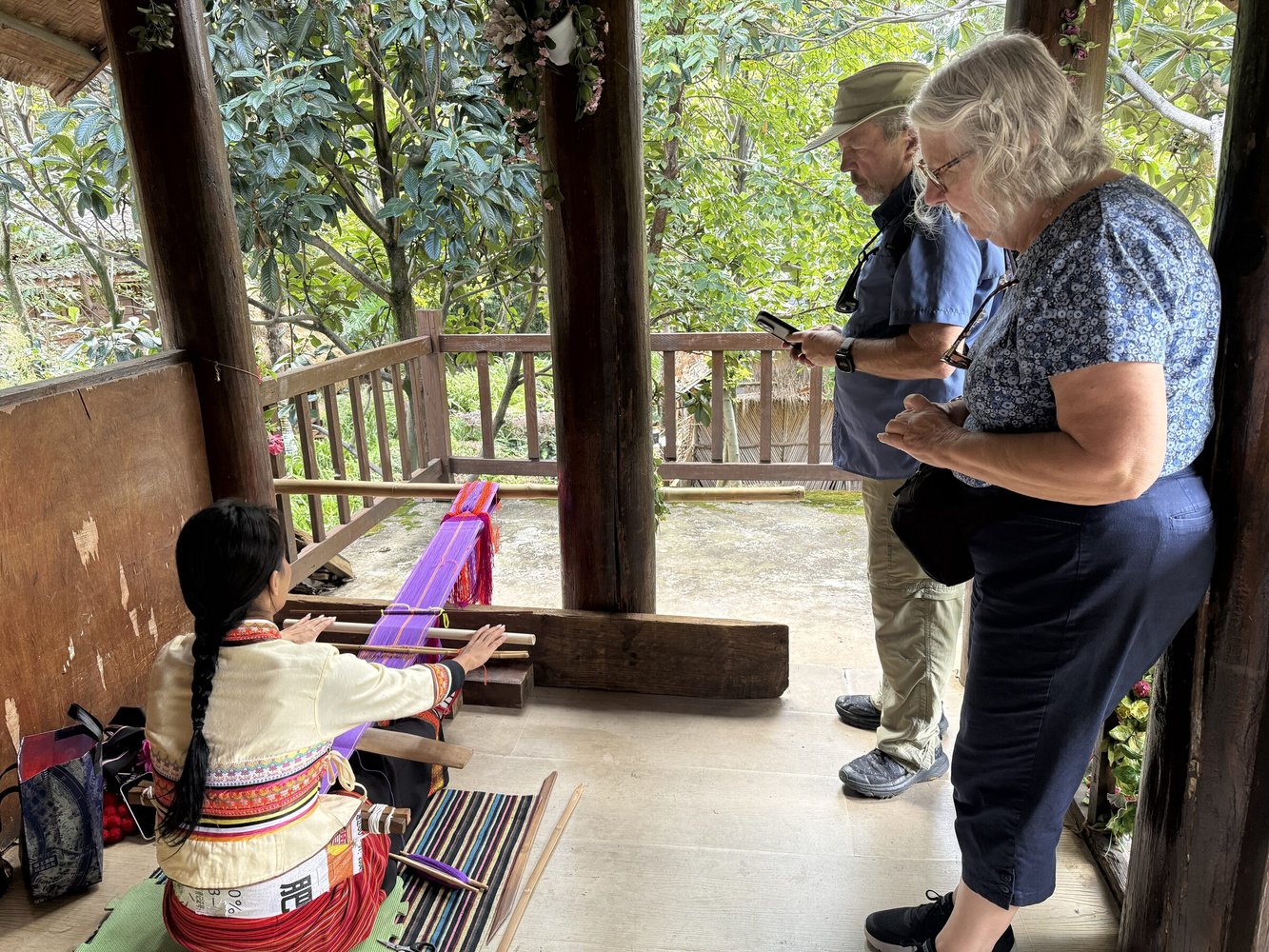
The people are why most travelers come back. Depending on your trip you might share tea in a Bai family's courtyard, learn a craft from a Naxi artisan or eat lunch in a village home. These visits are arranged with families who want to host and are paid fairly for it.
- Photos. Ask before photographing people, especially in villages. Ask a parent or guardian before photographing children.
- Temples and homes. Follow your guide's lead, and cover shoulders and knees at temples.
- A few words go a long way. "Nǐ hǎo" (hello) and "xièxie" (thank you) always earn a smile. Your guide handles every conversation you need.
- Buy from the maker. Crafts bought from the people who make them keep skills alive and money in the village.
- Less plastic. Bring a refillable bottle; we keep water in the vehicle to top it up.
- Animals. We don't offer elephant rides, animal shows or photos with captive wild animals.
- Children. We never include orphanage visits or volunteering with children. If anything ever worries you about a child's safety, tell your guide or our team right away.
Booking, payments and insurance
A deposit of 25% per traveler, with a $500 minimum, holds your place, and the balance is due 60 days before departure.
| If you cancel | What happens to what you've paid |
|---|---|
| More than 60 days before departure | Refunded in full, less card or bank processing fees |
| 60 to 30 days before | Becomes credit toward any of our departures within 24 months |
| Inside 30 days | Not refundable, but you can pass your place to someone else up to 21 days before departure |
- Included. All travel inside China, hotels, meals as listed, licensed English-speaking guides, scheduled activities and entry fees, and tips for guides and drivers.
- Not included. International flights, travel insurance, visa costs, alcohol, optional extras and souvenirs.
- Paying. Prices are in U.S. dollars. A card payment costs about 2.9% plus $0.30; an ACH bank payment costs 0.8%, capped at $5, so ACH saves you money on larger payments.
- Flights. Book your own, or we can book them for a small fee. Either way we check your times fit the trip and the visa-free rule.
- Insurance. Not required, but strongly encouraged, with medical, evacuation and cancellation cover. Buy it soon after your deposit, since some benefits only apply if you buy early.
- Travel advisors. You can book with us directly, or through an advisor you trust at the same price. Residents of California, Florida, Washington and Hawaii book through a travel advisor for now, and we're glad to connect you with one.
Next steps
When you're ready, there are three easy ways to start.
- See dates and prices for both guaranteed departures at harmonybridge.travel/trips.
- Tell Bobby about your trip at harmonybridge.travel/plan-my-trip. He reads every request himself and replies personally within 24 hours.
- Book a free 30 minute call with Bobby at harmonybridge.travel/meetings/bobby-robbins.
We spend most of the year in Yunnan, 13 to 14 hours ahead of U.S. time, so an evening message usually reaches us first thing in the morning.